Choosing Between Portable and Stationary Screw Compressors for Your Facility
Understanding the Two Approaches
When you need reliable compressed air for industrial operations, one of the first decisions is whether to go with a portable compressor or a stationary screw compressor. Each has a distinct place in a facility, and the right choice depends on how you use air, where you use it, and what your long-term plans look like. Portable units offer flexibility and lower upfront investment, while stationary screw compressors deliver higher airflow rates, better duty cycles, and greater efficiency for continuous demand.
Before you compare models, it helps to think about your actual air demand. A small repair shop that runs a few pneumatic tools intermittently has very different needs from a manufacturing line that operates multiple shifts. The operating pressure and the volume of air required, measured in cubic feet per minute, will guide your decision. So will the layout of your workspace and whether your air needs move around or stay in one place.
Portable Compressors: Flexibility at a Cost
Portable compressors are built to be moved. They typically sit on wheels or a small skid, and they come with a receiver tank that stores compressed air for short bursts of use. These units are common in construction, maintenance work, and small workshops where tools move from one area to another. They are also a practical choice for facilities that only need compressed air occasionally or for short periods.
The main advantage of a portable unit is mobility. You can roll it to a job site, plug it in, and start working. If your operation involves multiple locations or tasks that change throughout the day, a portable compressor saves you from running long air lines or installing permanent piping. Many portable models are also relatively simple to maintain, with fewer components than a large stationary system.
There are trade-offs, though. Portable compressors generally have a lower airflow rate and a shorter duty cycle. They are designed to run for a while, then stop and let the receiver tank refill. If you need a steady supply of air for long periods, a portable unit may struggle to keep up. Duty cycle is the key metric here: a compressor rated for a 50 percent duty cycle can run half the time and must rest the other half. Continuous use of pneumatic tools or equipment that requires a high volume of air will quickly exceed what a portable machine can deliver. Pressure drop also becomes noticeable when demand outpaces the compressor's ability to replenish the tank.
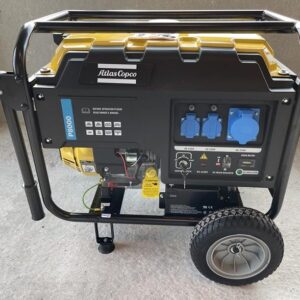
Another consideration is noise. Portable compressors are often louder than stationary screw compressors because their smaller, faster-running components produce more sound. In a workshop where people work nearby for hours, that noise can become a real issue. Some portable units come with sound-dampening enclosures, but they still tend to be noisier than their stationary counterparts.
Stationary Screw Compressors: Built for Continuous Duty
Stationary screw compressors are a different class of machine. They use two interlocking helical rotors to compress air in a continuous, smooth motion. This design allows them to run at high duty cycles, often 100 percent, without overheating. For facilities that need compressed air around the clock, a stationary screw compressor is the standard choice.
These compressors deliver a much higher airflow rate than portable units of similar horsepower. They also maintain consistent operating pressure even when multiple tools or processes draw air at the same time. The receiver tank in a stationary system is usually larger, which helps buffer sudden spikes in demand and reduces pressure drop. For operations that rely on pneumatic tools, conveyors, or automated machinery, this stability is critical.
Stationary screw compressors also tend to be more energy efficient over the long term. Because they are built to run continuously, they avoid the start-stop cycles that waste electricity and wear out motors. The screw mechanism itself generates less friction and heat than reciprocating designs, which means less energy is lost as heat. Over a year of daily use, the savings in electricity can be substantial, though the exact amount depends on local rates and your specific air demand.
Installation is more involved. A stationary compressor needs a dedicated space with proper ventilation, electrical supply, and often a concrete pad. You also need to run hard pipe or flexible hose throughout your facility to deliver air where it is needed. This upfront work adds cost and time, but it pays off if you plan to use the compressor for years.
When Each Setup Fits
The decision between portable and stationary screw compressors comes down to your operation's pattern of air use. If your work is intermittent, spread across different locations, or involves only a few tools at a time, a portable compressor is a practical fit. It gives you the freedom to move air where you need it without committing to permanent infrastructure.
If your facility runs production lines, operates multiple shifts, or uses air for processes that cannot tolerate interruptions, a stationary screw compressor is the better investment. The higher duty cycle and consistent airflow rate mean you can count on it day in and day out. The lower noise level is a bonus in an indoor environment where people spend their entire shift.
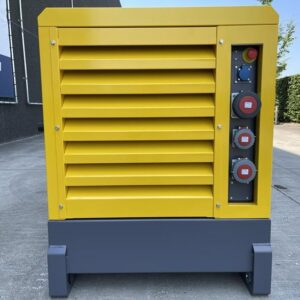
Some operations start with a portable unit and later add a stationary screw compressor as demand grows. That can be a sensible path, especially if you are unsure about future needs. The portable unit then becomes a backup or a mobile helper for maintenance tasks. When you reach the point where the portable compressor runs almost continuously and still cannot keep up, it is time to consider a stationary system.
At ePowerhouse LLC, you can explore both portable and stationary screw compressors to compare specifications and find what matches your air demand. Their marketplace covers a wide range of industrial equipment, so you can see the options side by side. Whether you need a small portable unit for job site work or a large stationary screw compressor for a factory floor, understanding your duty cycle and airflow requirements will guide you to the right setup.
Other Factors to Weigh
Beyond the basic choice of portable versus stationary, there are a few more details that matter. The type of pneumatic tools you use affects the required operating pressure. Most tools run well between 90 and 100 psi, but some specialty equipment needs higher pressure. Make sure the compressor you choose can deliver that pressure at the volume you need.
The environment where the compressor will sit also matters. Dust, humidity, and temperature extremes all affect performance and maintenance intervals. A stationary screw compressor in a clean, climate-controlled room will last longer than one exposed to construction debris or outdoor weather. Portable units are often more rugged, but they still need basic care like regular oil changes and filter cleaning.
Maintenance is another area where the two types differ. Portable compressors usually have simpler service requirements, but their smaller components may need more frequent attention. Stationary screw compressors have fewer moving parts under load, so they often run longer between overhauls. However, when they do need service, the work is more involved and may require a trained technician.
Noise levels can affect worker comfort and even compliance with local regulations. If your compressor will be near workstations or in a shared space, a quieter stationary screw compressor may be worth the extra cost. Portable units can be placed outside or in a separate room if noise is a concern, but that adds distance and may require longer air lines.
Making the Call
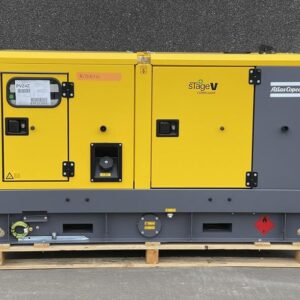
There is no single right answer for every facility. The best choice depends on how you use compressed air today and how you expect to use it in the future. If you need mobility and occasional use, a portable compressor is hard to beat. If you need continuous, reliable air for production, a stationary screw compressor is the standard. Many operations find that a combination of both serves them best: a stationary system for the main load and a portable unit for jobs away from the fixed lines.
When you evaluate compressors, pay attention to the airflow rate at your required operating pressure, the duty cycle, and the size of the receiver tank. These numbers tell you whether the machine can handle your real-world air demand. They also help you compare units from different manufacturers on a level playing field. At ePowerhouse LLC, you can review these specifications across a broad inventory of equipment, which makes it easier to match a compressor to your specific needs.
Taking the time to match your setup to your operation will save you money and frustration down the road. A compressor that is too small will run constantly and wear out quickly. One that is too large wastes energy and costs more than necessary. The right fit is the one that meets your demand with a comfortable margin, runs efficiently, and fits the space and budget you have available.